

Work Design Matters: Why Operational Excellence is the Secret to Sustainable Employee Well-being
- saafir.jenkins

- Feb 26
- 5 min read
Let’s be honest: your team isn’t burnt out because they lack "resilience." They aren't exhausted because they need another yoga app subscription or a "Mental Health Friday" that just results in a mountain of emails on Monday morning. They are exhausted because the way work is designed in your organization is fundamentally broken.
At Optimum Human Centered Solutions, we see this every day. Executives come to us wondering why their top talent is disengaging despite competitive salaries and "wellness perks." The answer is almost always hidden in the gears of your operations. When your systems are clunky, your workflows are opaque, and your communication channels are a chaotic mess of Slack notifications and "quick syncs," you are creating operational friction.
This friction acts like sand in an engine. Eventually, the engine seizes. In business, that seizure looks like high turnover, quiet quitting, and a stagnant bottom line. If you want to fix well-being, you have to fix the work itself. You have to move toward Operational Excellence.
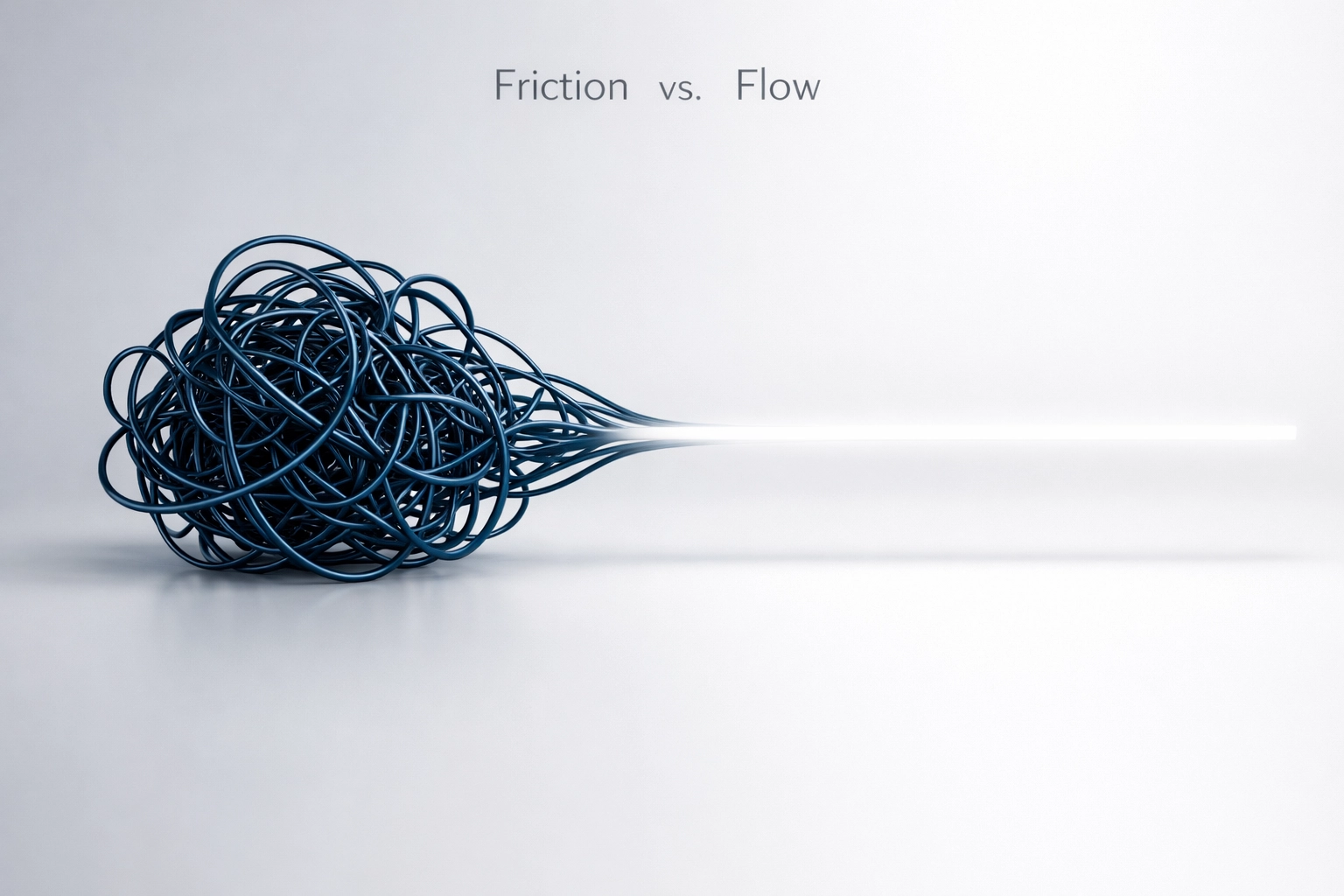
The Myth of the Resilience Deficit
For too long, the corporate narrative has shifted the burden of "well-being" onto the individual. We tell employees to "manage their stress" while we simultaneously hand them a shovel and ask them to dig a hole with a spoon.
Operational excellence isn't just about cutting costs or lean manufacturing; it’s about Work Design. When work is designed poorly: meaning roles are ill-defined, tools are inadequate, or processes are redundant: employees spend 40% of their day fighting the system rather than doing the job they were hired for. That "system fighting" is the primary driver of modern burnout.
To solve this, you must stop looking at HR and Operations as two separate silos. At Optimum HCS, we believe that the highest form of "human-centered" leadership is providing a work environment where a person can actually succeed without having to perform heroics every single day just to clear their inbox.
Step 1: Diagnose the Operational Friction in Your Workflows
Before you can fix the culture, you have to find where the "sand" is. Most leaders are too far removed from the day-to-day "clicks" of their employees to see the friction.
Open your internal process maps (or create them if they don’t exist). Click through the actual steps an employee takes to complete a standard task: whether that’s onboarding a client, filing a report, or requesting a budget approval.
Identify the "Shadow Work." This is the work about work. Are they manually entering data into three different systems? Are they waiting three days for a signature that could be automated?
Audit your meeting culture. If an executive’s calendar is 90% "status updates," that is an operational failure. It means your information systems are so poor that you have to use human time as a filing cabinet. Here you can create a more streamlined communication protocol that saves hundreds of hours of collective capacity.

Step 2: Apply Sovereignty Engineering to Your Organizational Structure
At Optimum HCS, we utilize a proprietary framework called Sovereignty Engineering. It sounds complex, but the core tenet is simple: give people the sovereignty to own their work by engineering the obstacles out of their way.
Map every role to a clear outcome, not just a list of tasks. When an employee has sovereignty over their domain, they have the autonomy to improve their own processes.
Configure your systems to support "Deep Work." This means setting clear boundaries on asynchronous communication and eliminating low-value administrative burdens. Sovereignty Engineering focuses on creating a "virtuous cycle" where the system protects the person, and the person improves the system.
Select tools that integrate, not isolate. If your IT stack doesn't talk to each other, your employees have to be the bridge. That bridge eventually collapses under the weight of cognitive load. By engineering sovereignty into the workflow, you reduce the mental tax on your team, which is the ultimate "wellness program."

Step 3: Integrate Ergonomics and Continuous Improvement
Operational excellence isn't a "one and done" project; it’s a commitment to continuous improvement. Research shows that organizations that involve employees in process design see a massive spike in well-being. Why? Because it signals that their expertise and their physical/mental comfort matter.
Protect the ergonomic health of your team: and we don’t just mean standing desks. We mean "cognitive ergonomics." Design your digital environment to prevent "notification fatigue."
Implement a feedback loop where employees can flag operational friction in real-time. When an operator tells you a process is frustrating, and you change it, you have done more for their well-being than any "wellness seminar" ever could. You have shown them they are a valued part of a functional system.
Analyze the data. Research indicates that wellness programs connected to operational design reduce absenteeism by 14-19%. When the work "flows," people don't need to take "mental health days" just to recover from the stress of their own tools.

Step 4: Monitor the P&L Impact of "Flow"
Sustainable well-being is not a line-item expense; it is a driver of the P&L. When you achieve operational excellence, you are essentially reducing the "cost of turnover" and the "cost of disengagement."
Calculate the ROI of streamlined workflows. Fewer errors, faster lead times, and higher customer satisfaction are the direct results of a team that isn't fighting their own internal systems.
Review your turnover rates after implementing Sovereignty Engineering. You will find that high-performers don't leave because of the work; they leave because of the "noise." Eliminate the noise, and you retain the talent.
Publish these wins internally. Let your team see that efficiency isn't about working "harder" or "faster": it's about working clearer. When the path is clear, the pace takes care of itself.
Conclusion: Stop Decorating the Burnout
It is time to stop trying to "fix" the employees and start fixing the work design. Operational excellence is the most overlooked strategy in the "War for Talent" and the "Well-being Crisis." By focusing on clear systems, streamlined workflows, and Sovereignty Engineering, you create a business that is both highly profitable and deeply human.
Manage your operations with the same care you manage your culture, because they are, in fact, the same thing.
Ready to transform your organizational design? Explore our strategic guidance and frameworks at Optimum Human Centered Solutions. Let's move beyond surface-level wellness and build systems that actually work for the people who run them.
Let’s Chat!
If you're ready to dive deeper into how Sovereignty Engineering can stabilize your workforce and boost your bottom line, check out our latest insights on the Optimum HCS Blog. Your team deserves a system that supports their excellence, not one that demands their exhaustion.
Go live by clicking Publish on your new operational strategy today.
Comments