

The Hidden Cost of 'Quiet Quitting': How Strategic People Alignment Saves Companies $2.3M Annually
- saafir.jenkins

- Jan 8
- 5 min read
Your most engaged employees are silently checking out, and it's costing your organization more than you realize. While executive teams debate remote work policies and performance metrics, a more insidious threat is eroding your competitive advantage from within: quiet quitting.
This isn't about employees who slack off or call in sick. These are your reliable performers who still meet deadlines, attend meetings, and complete assignments: but have mentally disengaged from driving innovation, mentoring teammates, or going beyond their job descriptions. The result? A productivity drain that Gallup estimates costs the global economy trillions of dollars annually.
But here's what most leaders miss: quiet quitting isn't an HR problem: it's a strategic alignment failure. And the organizations that crack this code are saving an average of $2.3 million annually through systematic people alignment strategies.
The True Financial Impact of Quiet Quitting

Most executives underestimate quiet quitting's financial impact because it doesn't show up in traditional metrics. Employees still clock in, projects get completed, and performance reviews look normal. But beneath this facade lies a cascade of hidden costs:
Productivity erosion represents the largest impact. When your top 20% of performers mentally check out, their output drops by an average of 34%, yet they remain on your payroll at full compensation. For a company with 500 employees, this translates to approximately $1.2 million in lost productivity annually.
Innovation stagnation follows close behind. Quiet quitters stop contributing ideas, challenging processes, or volunteering for strategic initiatives. This creativity gap forces organizations to rely heavily on external consultants and vendors for problem-solving that engaged employees previously handled internally.
Cultural contagion amplifies the damage exponentially. Research shows that disengagement spreads through teams at a rate of 1:3: one quiet quitter influences three other team members to reduce their engagement levels within six months.
Customer impact emerges as quiet quitters deliver technically correct but uninspired service. While they meet SLAs and follow scripts, they lack the emotional investment that creates memorable customer experiences and drives loyalty.
Why Traditional Engagement Strategies Fail
Most organizations attack quiet quitting with the wrong weapons. They deploy engagement surveys, wellness programs, and recognition platforms: essentially treating symptoms while ignoring root causes.
The fundamental issue isn't lack of perks or insufficient feedback. It's misalignment between individual purpose and organizational direction. Employees quiet quit when they can't see how their daily work connects to meaningful outcomes or when they feel their skills are underutilized relative to their potential.
Traditional approaches fail because they assume engagement is an emotional state that can be manipulated through external motivators. In reality, sustainable engagement emerges from strategic alignment: when employees understand how their individual success directly contributes to organizational success.
The Strategic People Alignment Framework
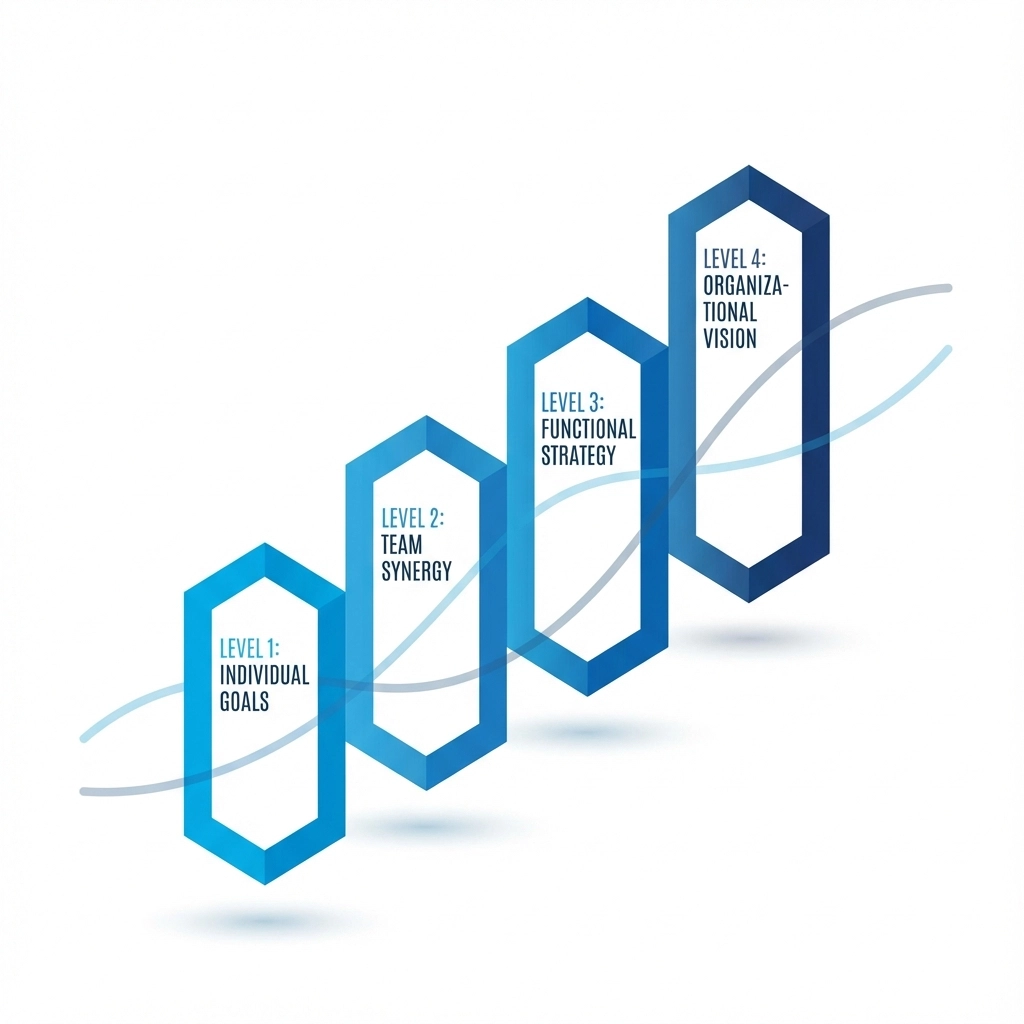
Strategic people alignment operates on four integrated levels that create sustainable engagement while delivering measurable business results:
Level 1: Purpose Clarity Integration
Connect individual roles to organizational strategy. Every employee should articulate how their position directly impacts customer outcomes, revenue generation, or operational efficiency. This isn't about creating mission statements: it's about mapping specific job functions to strategic business objectives.
Implement cascading goal systems that link individual performance metrics to departmental targets and corporate KPIs. When employees see their personal success driving organizational success, engagement becomes self-reinforcing rather than externally motivated.
Level 2: Capability Development Alignment
Audit skill gaps against future business requirements. Most quiet quitting occurs when employees feel their growth has stagnated or their skills are becoming obsolete. Strategic alignment requires continuous upskilling that serves both individual career advancement and organizational capability building.
Create dual-track development paths that offer both specialist and generalist progression routes. High-performers quiet quit when they perceive limited growth opportunities or when advancement requires abandoning their core competencies.
Level 3: Decision Authority Optimization

Expand decision-making authority at the execution level. Micromanagement drives quiet quitting faster than any other management behavior. Strategic alignment requires pushing decision authority down to the level where work actually happens.
Implement accountability without supervision frameworks. Replace activity monitoring with outcome measurement. When employees have clear targets and decision authority, they self-regulate performance more effectively than any management system.
Level 4: Value Exchange Transparency
Make the employment value proposition explicit and measurable. Beyond compensation, employees need to understand exactly what they gain from organizational success: career advancement opportunities, skill development, network expansion, and market reputation enhancement.
Create mutual success metrics that track both organizational performance and individual benefit realization. This transparency transforms employment from a transactional exchange into a strategic partnership.
Implementation Strategy: The 90-Day Alignment Sprint
Successful strategic people alignment requires systematic implementation across three 30-day phases:
Phase 1: Diagnostic and Design (Days 1-30)
Conduct alignment audits with high-performing employees who show early quiet quitting indicators. Use structured interviews to identify specific disconnection points between individual motivations and organizational objectives.
Map capability gaps against strategic business requirements for the next 18-24 months. This analysis reveals where employee development should focus to serve both individual growth and organizational needs.
Design role evolution pathways that show high-performers how their current positions can expand in scope, influence, and compensation based on demonstrated results.
Phase 2: Pilot and Refine (Days 31-60)
Launch pilot programs with one department or team to test alignment interventions. Focus on quick wins that demonstrate immediate value to both employees and management.
Implement real-time feedback systems that provide continuous visibility into alignment effectiveness. Unlike annual surveys, these systems capture engagement trends as they develop.
Refine intervention strategies based on pilot results and employee feedback. The goal is creating scalable processes that can be deployed organization-wide.
Phase 3: Scale and Optimize (Days 61-90)
Deploy organization-wide alignment initiatives using proven strategies from the pilot phase. This includes manager training, process documentation, and success metric establishment.
Establish ongoing optimization protocols that continuously refine alignment strategies based on business evolution and employee feedback.
Create sustainability systems that maintain alignment effectiveness without requiring constant management attention.
Calculating Your Strategic Alignment ROI
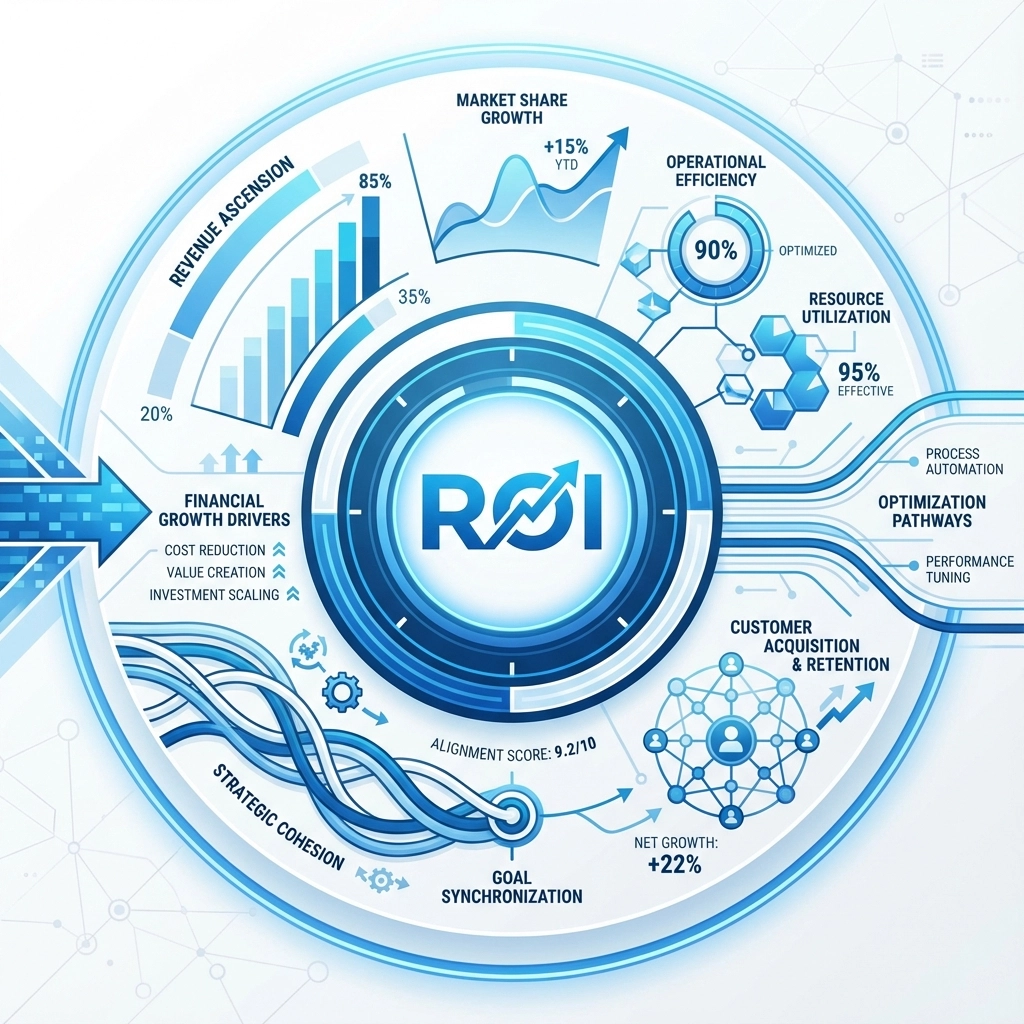
The $2.3 million annual savings figure represents average results across organizations that implemented comprehensive strategic people alignment. Your specific ROI depends on current engagement levels, organizational size, and implementation effectiveness.
Productivity recovery typically yields the largest returns. Organizations see 23-31% productivity increases among previously quiet quitting employees within 120 days of implementing strategic alignment.
Retention improvements generate significant cost savings. Each prevented departure of a high-performing employee saves approximately $75,000 in recruitment, onboarding, and productivity ramp-up costs.
Innovation acceleration becomes measurable through increased internal idea generation, process improvement suggestions, and voluntary participation in strategic initiatives.
Customer satisfaction improvements emerge as engaged employees deliver more creative solutions and proactive service.
Moving Beyond Band-Aid Solutions
Quiet quitting represents a strategic inflection point for modern organizations. Leaders can continue applying traditional engagement band-aids while watching their competitive advantage erode, or they can implement systematic people alignment strategies that transform employment from a transactional relationship into a strategic partnership.
The organizations that master strategic people alignment don't just reduce quiet quitting: they create sustainable competitive advantages through fully engaged human capital. They build cultures where individual success and organizational success become inseparable, creating self-reinforcing cycles of performance and engagement.
The choice is clear: continue managing symptoms or start addressing root causes. Your balance sheet will reflect the difference.
Ready to transform quiet quitting from a costly problem into a competitive advantage? Strategic people alignment requires systematic implementation and expert guidance to deliver maximum ROI.
Comments