

The Experience Gap Crisis: Why 89% of New Hires Lack Real-World Skills (And How Human-Centered Solutions Fix It)
- saafir.jenkins

- Jan 5
- 5 min read
The modern workplace faces an unprecedented challenge: a widening chasm between the skills new hires possess and the real-world competencies organizations desperately need. While specific industry research varies, the trend is unmistakable: new workforce entrants consistently arrive unprepared for the complex demands of today's business environment.
This experience gap isn't just a hiring inconvenience; it's a strategic crisis that's reshaping how forward-thinking organizations approach talent acquisition, development, and retention. The companies that solve this puzzle first will capture a significant competitive advantage in 2026 and beyond.
The Reality Behind the Skills Shortage
Current workforce data reveals a sobering picture. 40% of business leaders report that Gen Z graduates arrive unprepared for workplace demands, while 50% of employers consistently find that applicants lack relevant practical experience. Perhaps most telling, 36% of companies maintain open positions they simply cannot fill: not due to compensation constraints, but because qualified candidates with applicable skills remain elusive.
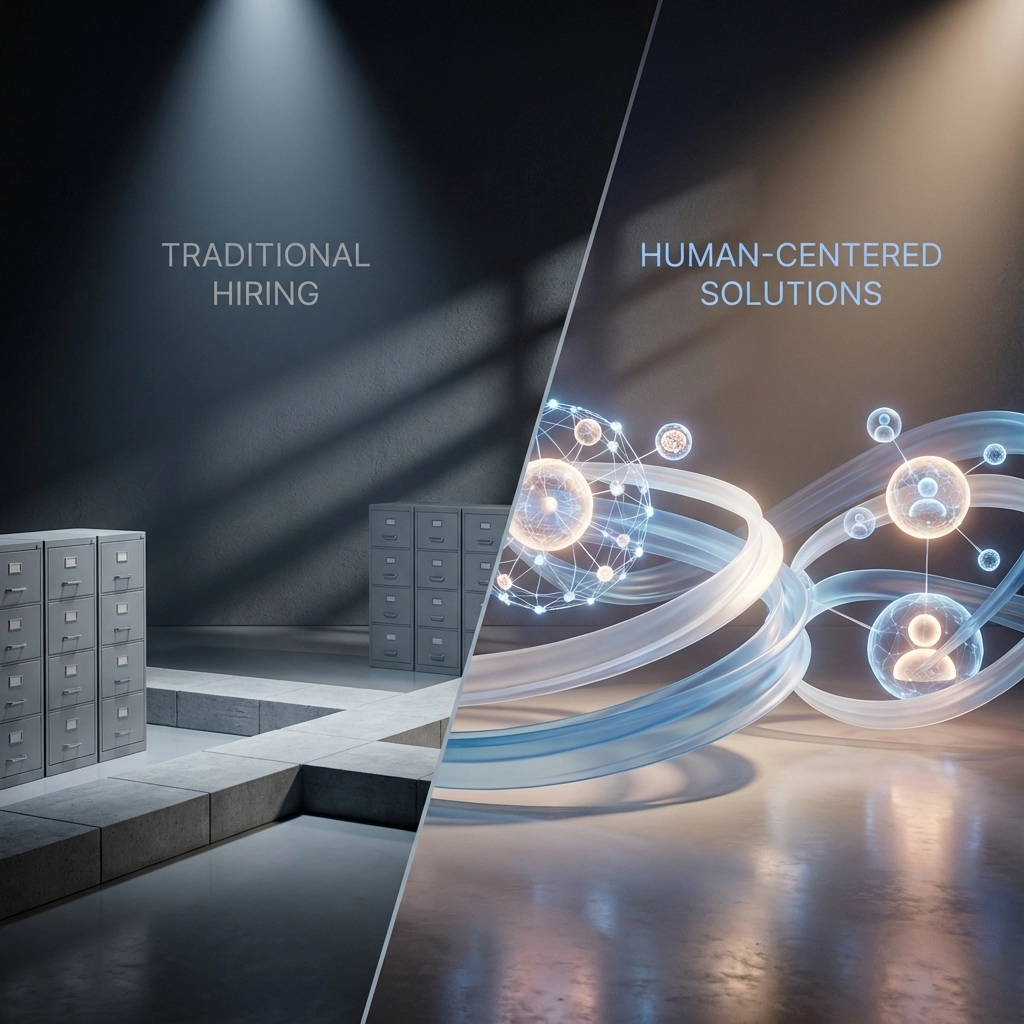
The experience gap manifests in multiple dimensions:
Technical Competency Deficits: New hires often possess theoretical knowledge but struggle to apply concepts in real-world scenarios with competing priorities, resource constraints, and stakeholder pressures.
Cross-Functional Integration Challenges: Modern roles demand hybrid thinking: the ability to connect marketing insights with operational realities, or translate customer feedback into product development priorities. Recent graduates typically lack this systems-level perspective.
Adaptive Problem-Solving Limitations: Academic environments provide structured problems with clear parameters. Business challenges are ambiguous, multi-faceted, and constantly evolving.
Stakeholder Management Inexperience: Professional success requires navigating complex internal politics, managing up and across organizational hierarchies, and building influential relationships: skills rarely developed in educational settings.
Why Traditional Hiring Approaches Perpetuate the Problem
Most organizations approach the experience gap as a filtering challenge rather than a development opportunity. This mindset creates a self-reinforcing cycle that excludes promising candidates while failing to build the capabilities their business actually needs.
Over-Reliance on Credential Screening: Traditional hiring focuses heavily on degrees, certifications, and previous job titles. However, 26% of employers struggle to properly evaluate informal or self-taught skills, meaning they're potentially overlooking candidates who've developed relevant capabilities through non-traditional paths.
Inadequate Assessment Methodologies: Standard interviews and skill tests rarely simulate the collaborative, fast-paced, resource-constrained environment where new hires will actually perform. Candidates who excel in controlled testing environments often struggle when facing real workplace complexity.
Insufficient Onboarding Investment: Many organizations treat onboarding as administrative processing rather than capability development. New hires receive compliance training and system access but minimal guidance on navigating organizational dynamics, understanding business context, or developing judgment.
The Hidden Costs of the Experience Gap
The financial implications extend far beyond unfilled positions. Organizations paying the experience gap penalty face:
Extended Time-to-Productivity: New hires without real-world skills require 6-12 months longer to reach full productivity, directly impacting project delivery, customer satisfaction, and revenue generation.
Increased Management Overhead: Supervisors spend 40-60% more time providing guidance, reviewing work, and correcting mistakes when managing inexperienced team members, reducing their capacity for strategic initiatives.
Higher Turnover Rates: 42% of employee departures are preventable, often stemming from inadequate onboarding, unclear expectations, and insufficient development support. Replacing and retraining staff costs 50-200% of annual salary depending on role complexity.
Competitive Disadvantage: While organizations struggle with skill gaps, competitors who solve this challenge capture market opportunities faster, innovate more effectively, and scale more efficiently.

Human-Centered Solutions That Bridge the Gap
The most successful organizations are abandoning traditional hiring orthodoxy in favor of human-centered approaches that develop capability rather than simply screening for it.
Skills-Based Hiring Evolution
Progressive companies are implementing competency-based assessment frameworks that evaluate candidates' ability to learn, adapt, and contribute rather than their existing experience level. This approach includes:
Situational Judgment Assessments: Present candidates with realistic business scenarios and evaluate their thinking process, not just their conclusions.
Collaborative Problem-Solving Exercises: Observe how candidates work with others, incorporate feedback, and navigate ambiguous challenges.
Learning Agility Evaluation: Assess candidates' capacity to acquire new skills quickly and apply insights across different contexts.
Structured Experience Development Programs
Rather than expecting new hires to arrive fully capable, leading organizations invest in systematic capability-building initiatives:
Mentorship Integration: Pair new hires with experienced professionals who provide context, guidance, and relationship-building support beyond technical training.
Cross-Functional Exposure: Rotate new hires through different departments to build systems thinking and collaborative skills.
Progressive Responsibility Frameworks: Design clear pathways for expanding scope and complexity as capabilities develop.
Real-World Application Focus
Effective development programs emphasize practical application over theoretical knowledge:
Project-Based Learning: Assign new hires to real business initiatives with appropriate support and oversight.
Customer Interaction Opportunities: Provide structured exposure to customer challenges and feedback to build market awareness.
Decision-Making Practice: Create low-risk environments where new hires can practice judgment and experience consequences.
Implementation Framework for Success
Organizations ready to address the experience gap systematically should follow this proven approach:
Phase 1: Assessment and Strategy Development (30-60 days)
Capability Gap Analysis: Identify specific skills and competencies where new hires consistently struggle. Document the business impact and development timeline for each gap.
Stakeholder Alignment: Ensure hiring managers, HR leadership, and senior executives agree on success metrics and resource allocation for gap-bridging initiatives.
Resource Planning: Determine mentor availability, training budget, and system requirements for enhanced development programs.
Phase 2: Process Redesign (60-90 days)
Hiring Criteria Revision: Replace experience requirements with capability indicators and learning potential assessments.
Assessment Method Enhancement: Develop realistic job simulations and collaborative exercises that predict actual performance.
Onboarding Program Expansion: Design comprehensive development curricula that address technical skills, organizational navigation, and business acumen.
Phase 3: Implementation and Optimization (Ongoing)
Pilot Program Launch: Begin with a small cohort to test processes, gather feedback, and refine approaches before scaling.
Performance Tracking: Monitor time-to-productivity, retention rates, and manager satisfaction to validate program effectiveness.
Continuous Improvement: Regular assessment and iteration based on business outcomes and participant feedback.
The Strategic Advantage of Getting This Right
Organizations that successfully bridge the experience gap gain substantial competitive benefits:
Expanded Talent Pool: Access to high-potential candidates previously excluded by traditional screening processes.
Faster Innovation: Teams with diverse experience levels often generate more creative solutions and challenge conventional thinking.
Enhanced Employer Brand: Reputation for developing talent attracts higher-quality candidates and improves retention.
Improved Business Agility: Organizations skilled at rapid capability development adapt more quickly to market changes and emerging opportunities.
The experience gap crisis represents both a significant challenge and a transformative opportunity. Organizations that embrace human-centered solutions: focusing on potential rather than just experience, development rather than just screening: will build more capable, engaged, and adaptable workforces.
The question isn't whether your organization can afford to invest in bridging the experience gap. The question is whether you can afford not to, while competitors capture the talent and capabilities that drive sustainable growth.
Ready to transform your approach to talent development and gain competitive advantage? Explore our strategic consulting services to design and implement human-centered solutions that turn the experience gap from liability into strategic asset.
Comments