

Workforce Data Matters: How to Turn People Analytics Into Real Business Optimization
- saafir.jenkins

- Jan 26
- 4 min read
Your organization sits on a goldmine of workforce data. The question isn't whether you have enough information: it's whether you're transforming that data into decisions that move the needle on revenue, retention, and competitive advantage.
Most companies treat people analytics as an HR reporting function. They generate dashboards, track headcount, and measure turnover rates. But here's the hard truth: static reporting doesn't optimize anything. The organizations pulling ahead in 2026 are the ones treating workforce data as a strategic asset that directly impacts the P&L.
McKinsey research shows companies implementing people analytics effectively see productivity gains of up to 25% and attrition reductions of 30%. Organizations using AI-driven analytics improve workforce retention by 40% and reduce hiring costs by 35%. These aren't incremental improvements: they're transformational outcomes.
This guide walks you through how to turn your people data into real business optimization, step by step.
The Fundamental Shift: Start With Decisions, Not Data
Here's where most organizations get it wrong from the start. They collect massive amounts of workforce data, dump it into dashboards, and then ask: "What insights can we find?"
Flip that approach entirely.
Define the business decision first. Then identify the data points that inform that decision. This single shift transforms people analytics from a passive reporting function into an active strategic driver.
Ask yourself these questions before touching any data:
When you anchor analytics to specific business decisions, every data point serves a purpose. You stop drowning in metrics and start swimming toward outcomes.
Build Your Data Foundation: What to Collect and Integrate
People analytics requires comprehensive data across multiple workforce dimensions. Gather information from these core categories:
Employee demographics and organizational structure
Performance metrics and productivity data
Engagement survey results and sentiment indicators
Turnover rates and exit interview themes
Recruitment statistics and source effectiveness
Learning and development participation
Compensation and benefits utilization
The real power emerges when you integrate these data streams into a unified system. High-performing organizations connect workforce data to enterprise systems, enabling cross-functional analysis that reveals patterns invisible in siloed reports.
Pro tip: Establish governance structures that allow monthly reviews of key workforce dashboards. This cadence keeps insights fresh and enables rapid intervention when metrics shift.
Strategic Applications That Drive Business Optimization
People analytics isn't just about understanding your workforce: it's about optimizing business performance through your workforce. Here's how leading organizations apply analytics to specific business challenges:
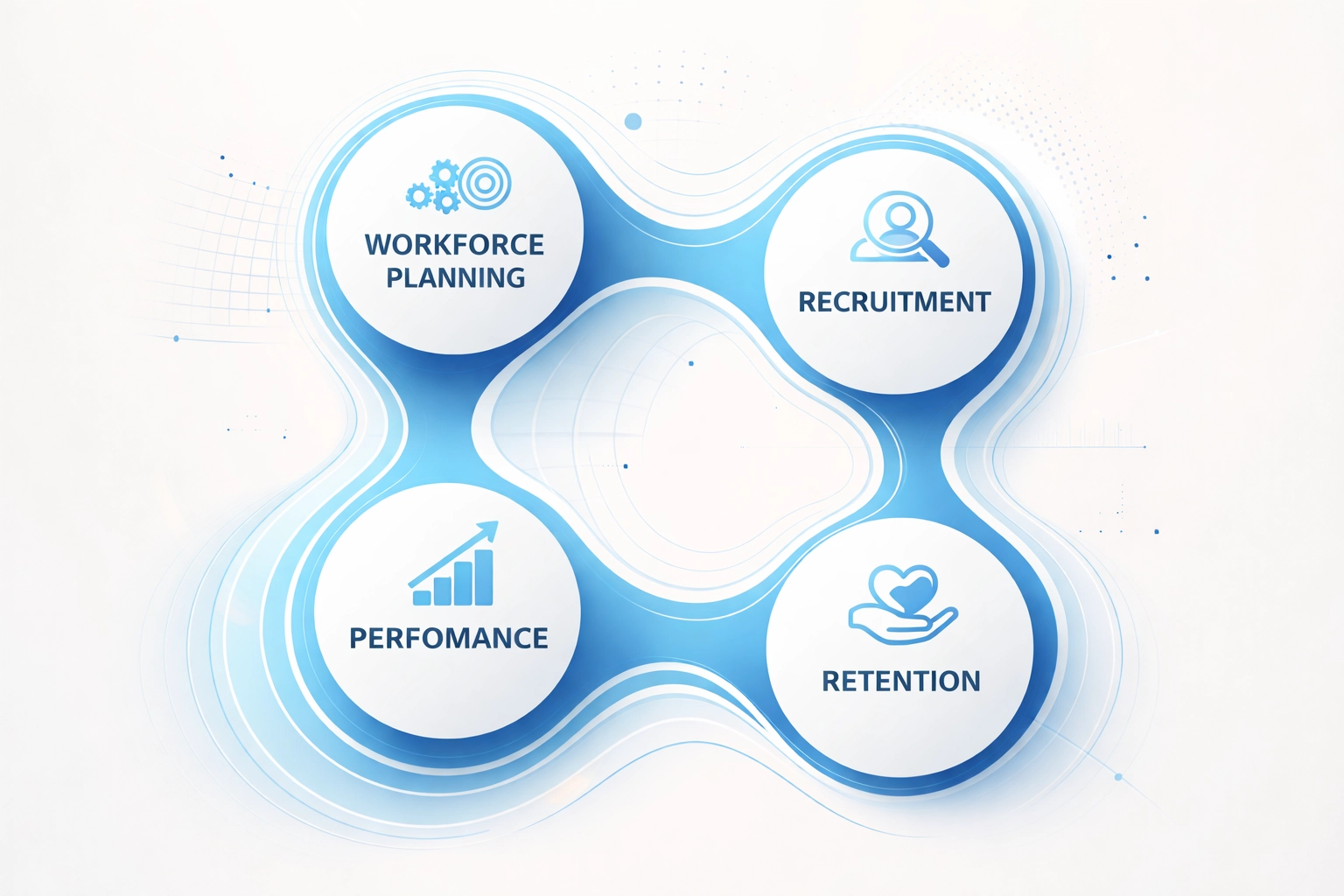
Workforce Planning and Resource Allocation
Stop reacting to talent gaps. Start predicting them.
Use predictive modeling to forecast talent needs 6-18 months ahead. Analyze project pipelines, growth projections, and historical hiring patterns to identify where skill shortages will emerge before they constrain business execution.
Organizations applying advanced workforce planning see 35% improvement in planning accuracy: translating directly to reduced emergency hiring costs and better project delivery.
Take action: Map your critical roles against retirement projections, internal mobility patterns, and market availability. Build targeted development programs for roles where external talent is scarce.
Recruitment Optimization
Your recruitment data tells you which sources produce top performers: not just which sources produce hires.
Analyze the correlation between candidate sources, interview scores, and 12-month performance outcomes. You'll likely discover that some high-volume sources produce mediocre results while overlooked channels deliver exceptional talent.
Key metrics to track:
Time-to-fill by role and source
Quality-of-hire (performance ratings at 6 and 12 months)
Source-to-performance correlation
Offer acceptance rates by candidate profile
Companies applying this analysis reduce time-to-fill by 20-25% while simultaneously improving candidate quality.
Retention and Turnover Prevention
Waiting for exit interviews means waiting until it's too late. Predictive retention analytics identify flight risks before resignation letters land on desks.
AI-driven models assess turnover risk by analyzing engagement trends, compensation competitiveness, career progression velocity, manager relationship indicators, and workload patterns. When the model flags elevated risk for a high-performer, managers can intervene with targeted retention strategies.
Implement these steps:

Performance and Productivity Enhancement
People analytics reveals what distinguishes your top performers from average contributors. These insights inform hiring criteria, development programs, and team composition decisions.
Analyze performance data alongside behavioral indicators, skill assessments, and collaboration patterns. Identify the specific competencies and working styles that predict exceptional performance in each role category.
Organizations making this investment see 25% productivity improvements: a direct bottom-line impact that compounds across the workforce.
Critical Success Factors for Implementation
Knowing what to do and actually executing are different challenges. These factors determine whether your people analytics initiative delivers real business value:
Build Internal Analytics Capability
Don't outsource all interpretation to data scientists disconnected from business context. Train HR business partners and line managers to understand and act on analytics insights. When frontline leaders can interpret workforce data, insights translate to action faster.
Monitor Continuously, Not Annually
Annual engagement surveys are archaeology: they tell you what happened months ago. Shift to dynamic monitoring that captures workforce signals monthly or quarterly. This cadence allows you to test interventions and observe their effects in near-real-time.
Prioritize Data Quality and Employee Trust
Analytics built on bad data produce bad decisions. Invest in data hygiene and integration before scaling analytics ambitions.
Equally important: build employee trust through transparent communication. Frame analytics dashboards as tools for equity and empowerment, not surveillance. When employees understand that data drives better development opportunities and fairer treatment, resistance decreases.
Focus Ruthlessly on Actionable Insights
The goal isn't comprehensive reporting: it's strategic decision support. Position your analytics function as a problem-solving partner, not a metrics factory.
For every analysis, demand clarity on: What decision does this inform? Who acts on it? What action do they take?
A PwC study found businesses leveraging predictive HR analytics experience 35% higher employee engagement and 40% increases in overall workforce efficiency. These outcomes don't come from dashboards alone: they come from disciplined focus on insights that drive action.
Transform Data Into Competitive Advantage
More than 70% of companies now use people analytics to improve performance, according to Deloitte research. The differentiator isn't whether you have analytics: it's whether you're converting insights into optimized business outcomes.
Start with decisions, not data. Build comprehensive, integrated data foundations. Apply analytics to specific business challenges where workforce optimization drives measurable results. And maintain disciplined focus on insights that translate to action.
Your workforce data contains the blueprint for competitive advantage. The organizations that learn to read that blueprint: and act on it: will outperform those still treating people analytics as an HR reporting function.
Ready to transform your workforce data into strategic business advantage?Explore how Optimum Human Centered Solutions partners with organizations to build people analytics capabilities that drive measurable results. Let's talk about where your workforce data can take your business next.
Comments