

Culture Dissonance Is Costing You Millions: The Ultimate Guide to Aligning Aggressive Goals With Real Employee Experience
- saafir.jenkins

- 1 day ago
- 6 min read
You've probably sat through the all-hands meeting where leadership talks about "putting people first" and "valuing work-life balance": only to watch the same executives reward the manager who sends emails at 11 PM and brags about working weekends.
That gap? That's culture dissonance. And it's bleeding your organization dry.
Culture dissonance is the friction between what you say your company values and what your systems, incentives, and daily behaviors actually reward. It's the difference between the glossy values poster in the break room and the reality your employees experience every single day. And according to Harvard Business Review, over 90% of companies are wrestling with this issue: often without even realizing the full extent of the damage.
Let's be clear: this isn't a "soft" HR problem. Culture dissonance directly impacts your bottom line through delayed projects, strained cross-functional relationships, skyrocketing turnover, and productivity drains that compound quarter after quarter. If you're pushing aggressive growth targets while ignoring the employee experience gap, you're essentially building on a foundation that's already cracking.
The Hidden P&L Impact You're Missing
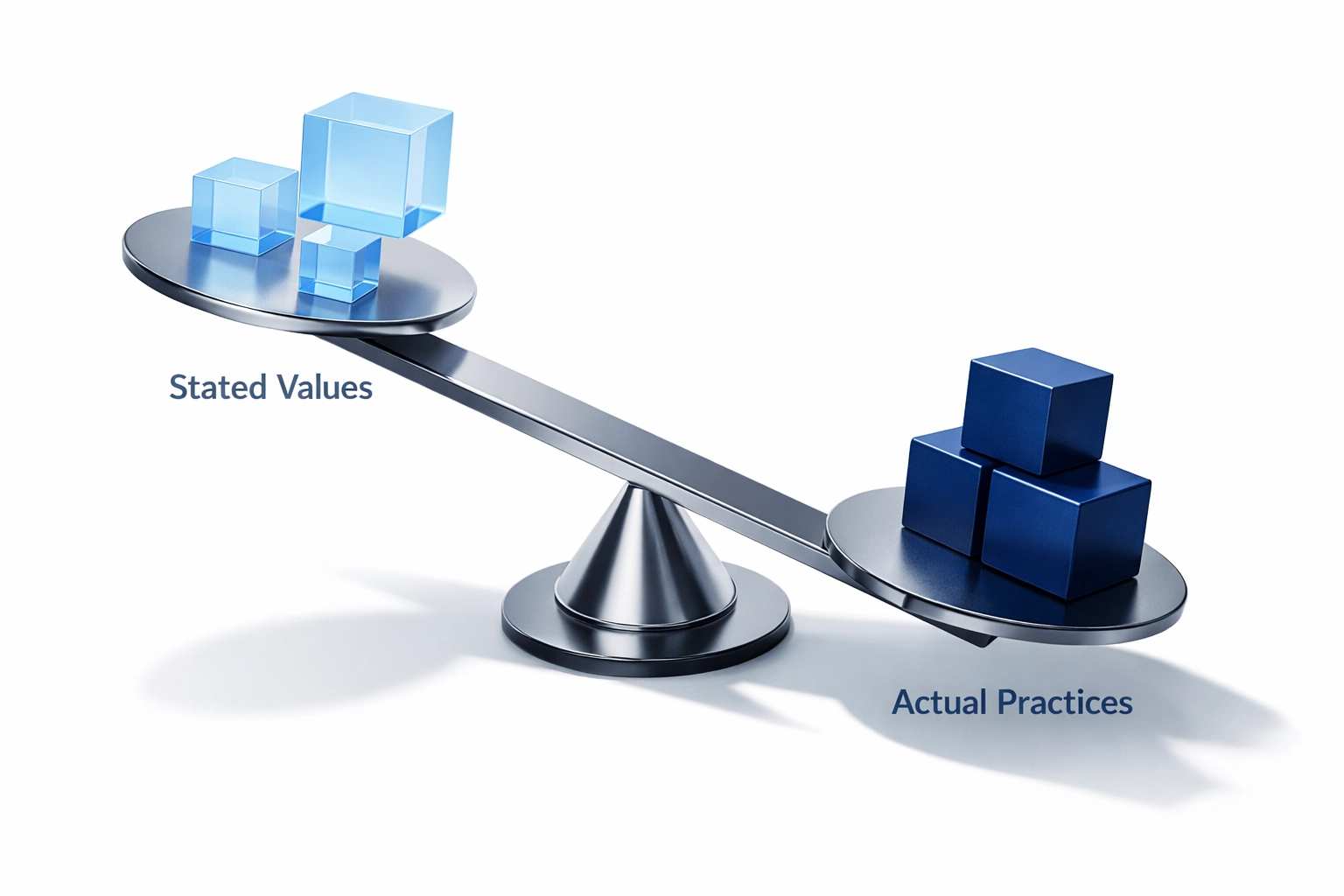
The real cost of culture dissonance extends far beyond a few disgruntled employees or an uptick in Glassdoor complaints. When your stated organizational values don't match your operational reality, you trigger a cascading failure across multiple business-critical areas:
Trust erosion accelerates turnover cycles. When employees watch leadership promote "collaboration" while rewarding territorial behavior, or champion "innovation" while punishing intelligent failures, they stop believing anything you say. That credibility gap doesn't just hurt morale: it drives your top performers straight to competitors who lead with clarity and consistency.
Burnout becomes baked into operations. A European automotive manufacturer discovered this the hard way when they established a manufacturing plant in China. European managers expected highly organized, process-oriented execution. The local Chinese workforce operated with a more flexible, relationship-oriented approach. Neither side was "wrong": but the misalignment created constant friction, leading to project delays, quality issues, and staff turnover that lasted until management finally adapted their approach to respect local cultural norms.
Engagement drops, and so does discretionary effort. Your people do what you inspect and reward, not what you expect and declare. If your compensation system rewards individual heroics while your mission statement preaches teamwork, guess which one wins? Employees aren't stupid: they see the game. And when they do, they stop giving you the creative problem-solving, cross-team collaboration, and proactive initiative that actually drives competitive advantage.
The cycle compounds. Lost productivity triggers hiring pressure. Rushed hiring leads to poor cultural fit. Poor fit increases dissonance. Dissonance drives more turnover. Repeat. Each cycle costs you recruiting fees, onboarding time, lost institutional knowledge, and the opportunity cost of what those employees could have contributed if your culture actually matched your claims.
Where Culture Dissonance Shows Up (And How to Spot It)
Culture dissonance doesn't announce itself in a memo. It lives in the daily contradictions your employees navigate:
The Strategy/Execution Gap: Your leadership team declares "customer obsession" as a core value, but your internal systems reward speed-to-ship over quality feedback loops. Sales gets bonuses for closed deals regardless of customer fit. Product timelines penalize teams who slow down to validate assumptions. The message is clear: we say customer, but we mean quota.
The Communication/Accountability Gap: You promote "psychological safety" and "open dialogue," but the last three people who raised concerns about unrealistic timelines were quietly managed out or passed over for promotion. Employees learn quickly: speaking up is career suicide. So they stay silent, and you lose the early warning signals that could prevent expensive failures.

The Flexibility/Presenteeism Gap: The company handbook touts "flexible work arrangements" and "outcomes over hours," but managers still track who's online at 8 AM sharp and side-eye anyone who blocks their calendar for a mid-day workout. The real culture? Performative busyness wins. Actual results are secondary to visible effort.
The Innovation/Risk Tolerance Gap: Leadership says they want "bold thinking" and "intelligent risk-taking." But your budget process punishes any team that misses a forecast, your promotion criteria reward flawless execution over creative experimentation, and your post-mortem culture looks for someone to blame rather than systems to fix. You don't have an innovation problem: you have a culture dissonance problem disguised as "risk aversion."
A technology company faced a similar crisis when their U.S. headquarters clashed with their Japanese office over decision-making speed and communication styles. American teams expected rapid iteration and direct feedback. Japanese teams valued consensus-building and indirect communication. Projects stalled. Relationships fractured. It wasn't until they invested in cross-cultural training and created hybrid operating norms that the dissonance resolved and productivity recovered.
The Strategic Alignment Framework: How to Close the Gap
Fixing culture dissonance isn't about running another employee engagement survey or updating your values statement. It requires surgical alignment between what you say, what you measure, and what you reward. Here's how to do it:
Step 1: Audit Your Stated Values Against Actual Incentives
Pull out your company values, mission statement, and any public declarations about culture. Now map them against your actual systems:
What behaviors does your compensation plan reward?
What gets someone promoted in the last 12 months?
What do managers get in trouble for: and what do they get away with?
Where do you allocate budget and leadership attention?
If your values say "collaboration" but your comp plan is 100% individual performance-based, you've found dissonance. If you claim "work-life balance" but only promote people who respond to Slack at midnight, you've found dissonance. Write it down. Be brutally honest.
Step 2: Identify the Top Three Disconnects Draining the Most Value
Not all culture gaps are created equal. Prioritize based on business impact:
Which misalignment is driving the most expensive turnover?
Which gap is slowing down your most strategic initiatives?
Which contradiction is creating the loudest customer complaints or quality issues?
Focus your energy on the disconnects that matter most to your P&L. You can't fix everything at once, but you can stop the biggest leaks first.

Step 3: Redesign One System at a Time (Starting With Incentives)
Pick your highest-impact disconnect and change the system that's creating it. If the problem is collaboration, redesign your performance reviews and bonuses to include team outcomes, not just individual contributions. If the issue is innovation, build "intelligent failure" metrics into how you evaluate risk-taking and create budget flexibility for experimentation.
Make the change visible and explain the "why" behind it. Employees have been burned before by empty promises. Show them you're willing to put your money: and your systems: where your mouth is.
Step 4: Equip Managers to Have Data-Driven Alignment Conversations
Your frontline managers are the ones translating corporate strategy into daily reality. If they don't understand how to connect individual work to business outcomes, or how to navigate the tension between aggressive goals and sustainable pace, dissonance will persist.
Train managers to:
Articulate why specific behaviors matter to team and company success
Use objective criteria (not subjective preferences) to evaluate performance
Have career development conversations that link skill-building to both business needs and individual growth
Recognize and call out when systems and incentives aren't aligned: and escalate for fixes
Step 5: Create Feedback Loops That Surface Dissonance Before It Metastasizes
Build mechanisms that let employees flag contradictions without career risk:
Quarterly pulse checks with specific questions about alignment (not generic engagement scores)
Skip-level conversations where leadership hears unfiltered feedback
Exit interview analysis that identifies patterns in "why people really left"
Cross-functional retrospectives that examine system failures, not individual blame
The goal isn't to eliminate all tension: aggressive goals should create healthy pressure. The goal is to catch the moments when that pressure turns toxic because your systems are sending mixed signals.
The Bottom Line: Culture Integrity Is a Competitive Advantage
Here's what most leaders miss: culture dissonance isn't a "nice to fix" initiative. It's a strategic liability that compounds every quarter you ignore it.
When your culture actually matches your claims, you unlock:
Faster execution because employees aren't navigating contradictory incentives
Higher retention because people trust that investment in the company will be reciprocated
Better innovation because the system rewards intelligent risk, not just safe bets
Stronger customer outcomes because internal alignment flows through to external delivery
Companies that genuinely align their stated values with their systems, rewards, and daily behaviors don't just improve engagement scores: they gain the discretionary effort, creative problem-solving, and cross-functional collaboration that aggressive growth targets actually require.
Your people already know where the gaps are. The question is: are you willing to fix the systems creating them, or just keep talking about values you don't actually reinforce?
Ready to close the culture gap and align your people strategy with your business goals? At Optimum Human Centered Solutions, we help leadership teams audit the disconnects draining value, redesign the systems creating dissonance, and build cultures where aggressive goals and real employee experience actually reinforce each other. Let's talk about what alignment could unlock for your organization.
Comments