

Why 73% of Business Optimization Projects Fail: The Human Capital Solutions Framework Leaders Are Missing
- saafir.jenkins

- Dec 30, 2025
- 5 min read
Every quarter, executives pour millions into optimization initiatives designed to streamline operations, boost efficiency, and drive growth. Yet here's the sobering reality: 73% of business leaders admit their projects are "doomed right from the start," and only 29% of projects consistently meet their original goals and business intent.
The culprit isn't inadequate technology or flawed processes: it's the systematic failure to address the human element that drives every successful transformation.
The Real Cost of Ignoring Human Capital in Optimization Projects
Traditional project management approaches treat people as resources to be managed rather than strategic assets to be optimized. This fundamental misunderstanding creates a cascade of failures that derail even the most well-funded initiatives.
The data reveals the true scope of the problem:
40% of projects fail due to changing organizational priorities: a direct result of poor stakeholder alignment
38% collapse from inaccurate requirements: stemming from inadequate human input and communication
35% derail from shifting objectives: indicating weak change management and leadership engagement
30% fail from poor communication: the most preventable yet persistent human capital issue

These aren't technology failures or budget constraints. They're human capital management failures that compound into operational disasters costing organizations an average of $1.2 million per failed project.
The Missing Framework: Strategic People Alignment in Business Optimization
Most optimization efforts focus on processes, systems, and metrics while treating human capital as an afterthought. This approach ignores a fundamental truth: every business process is ultimately executed by people, and optimization success depends entirely on human adoption, engagement, and sustained execution.
The Strategic People Alignment Framework addresses this gap by integrating human capital considerations into every phase of optimization projects.
Framework Component 1: Stakeholder Ecosystem Mapping
Traditional approach: Identify key stakeholders and send project updates.
Strategic People Alignment approach: Map the complete stakeholder ecosystem including formal decision-makers, informal influencers, and execution champions. Analyze power dynamics, communication preferences, and change resistance patterns.
Implementation: Create a stakeholder influence matrix that identifies not just who needs to approve changes, but who can accelerate or sabotage implementation. Develop customized engagement strategies for each stakeholder segment based on their motivations, concerns, and communication preferences.
Framework Component 2: Change Capacity Assessment
Most organizations launch optimization projects without understanding their current change capacity: the collective ability to absorb, process, and sustain transformation.
Key metrics to assess:
Current change initiative load across departments
Historical change success rates and patterns
Leadership stability and engagement levels
Employee capacity for additional responsibilities
Cultural readiness for the specific type of change
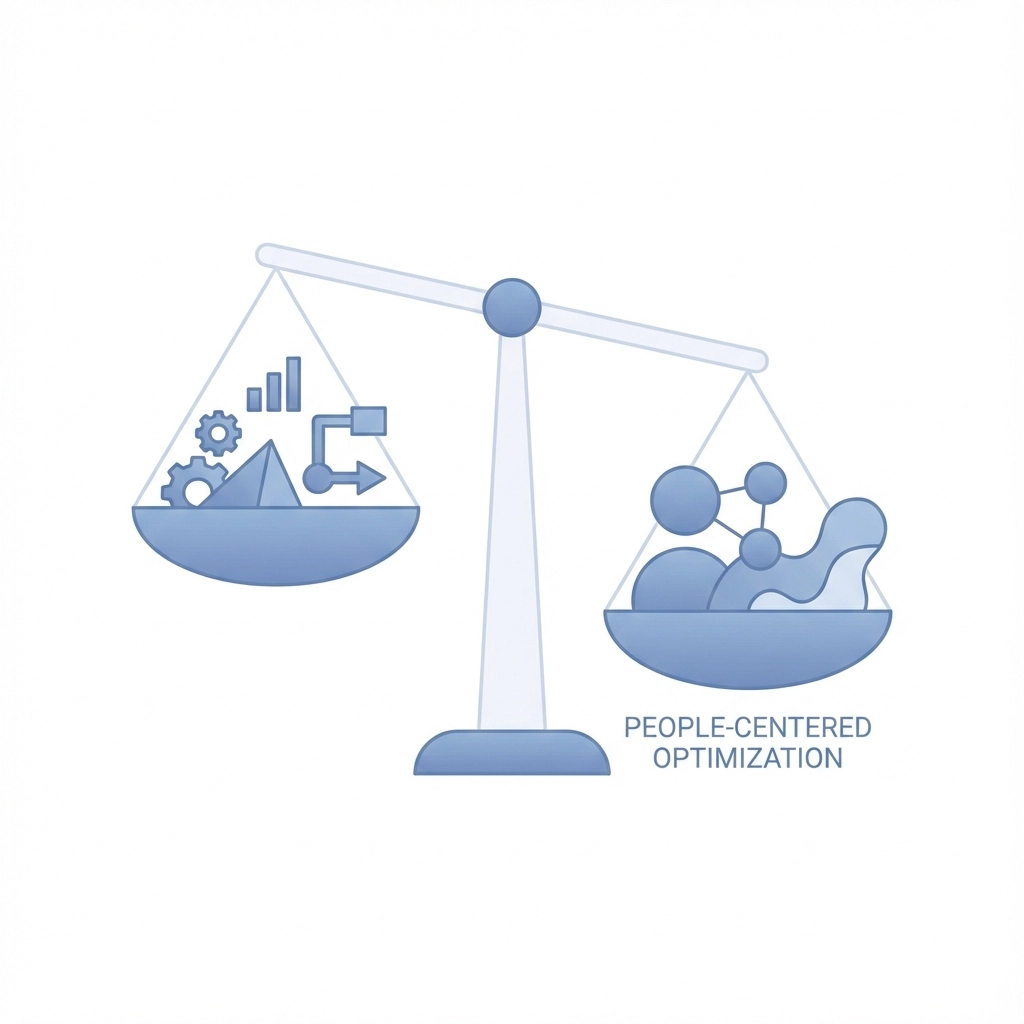
Strategic insight: Organizations with high change capacity can handle 3-4 simultaneous optimization initiatives. Those with low capacity should limit themselves to 1-2 projects to ensure success.
Framework Component 3: Communication Architecture Design
Poor communication destroys more optimization projects than budget constraints and technical issues combined. The framework requires designing a communication architecture that ensures consistent, relevant, and actionable information flow.
Essential elements:
Cascade communication plans that adapt messages for different organizational levels
Feedback loops that capture concerns and resistance before they become roadblocks
Success storytelling that builds momentum and buy-in throughout implementation
Milestone celebration protocols that maintain engagement during long-term projects
The Implementation Imperative: From Framework to Results
Understanding the framework is valuable. Implementing it systematically is transformational. Here's how to activate Strategic People Alignment in your next optimization initiative:
Phase 1: Pre-Project People Strategy (Weeks 1-2)
Map your human capital landscape. Before defining project scope, conduct comprehensive stakeholder analysis. Identify decision-makers, influencers, potential resistors, and execution champions. Assess their current workload, change history, and motivation factors.
Establish communication protocols. Define how information will flow up, down, and across the organization. Create templates for regular updates, feedback collection, and issue escalation. Set expectations for response times and decision-making authority.
Design change management integration. Build change management activities directly into project timelines rather than treating them as separate workstreams. Allocate 20-30% of project time and budget to people-focused activities.

Phase 2: Active People Engagement (Throughout Implementation)
Deploy continuous stakeholder pulse checks. Use brief, regular surveys to monitor engagement, identify emerging concerns, and track adoption readiness. React quickly to negative trends before they impact project success.
Implement staged communication rollouts. Share information based on stakeholder needs and timing. Avoid overwhelming teams with irrelevant details while ensuring decision-makers have comprehensive context.
Activate champion networks. Identify and empower informal leaders who can influence their peers and accelerate adoption. Provide them with tools, talking points, and recognition to maximize their impact.
Phase 3: Sustaining Optimization Success (Post-Implementation)
The most critical phase begins after initial implementation. Without sustained focus on human capital factors, even successful optimizations decay rapidly.
Establish performance monitoring that includes human metrics. Track not just operational KPIs but engagement scores, adoption rates, and resistance indicators. These leading indicators predict long-term success better than traditional project metrics.
Create feedback and iteration cycles. Build formal processes for collecting user feedback and implementing improvements. This demonstrates ongoing commitment to employee experience and prevents regression.
Develop internal capability for future optimizations. Train your team to apply Strategic People Alignment principles to future projects, creating organizational competency that reduces external consulting dependence.
The Strategic Advantage: Why This Framework Drives Bottom-Line Results
Organizations that implement Strategic People Alignment see 85% project success rates compared to the industry average of 27%. More importantly, their optimizations achieve sustained results because they're built on solid human capital foundations.
Quantifiable benefits include:
40% faster implementation timelines due to reduced resistance and clearer communication
60% higher adoption rates resulting from proactive engagement and change management
25% lower total project costs through reduced rework and resistance management
90% sustainability rates at 12 months post-implementation
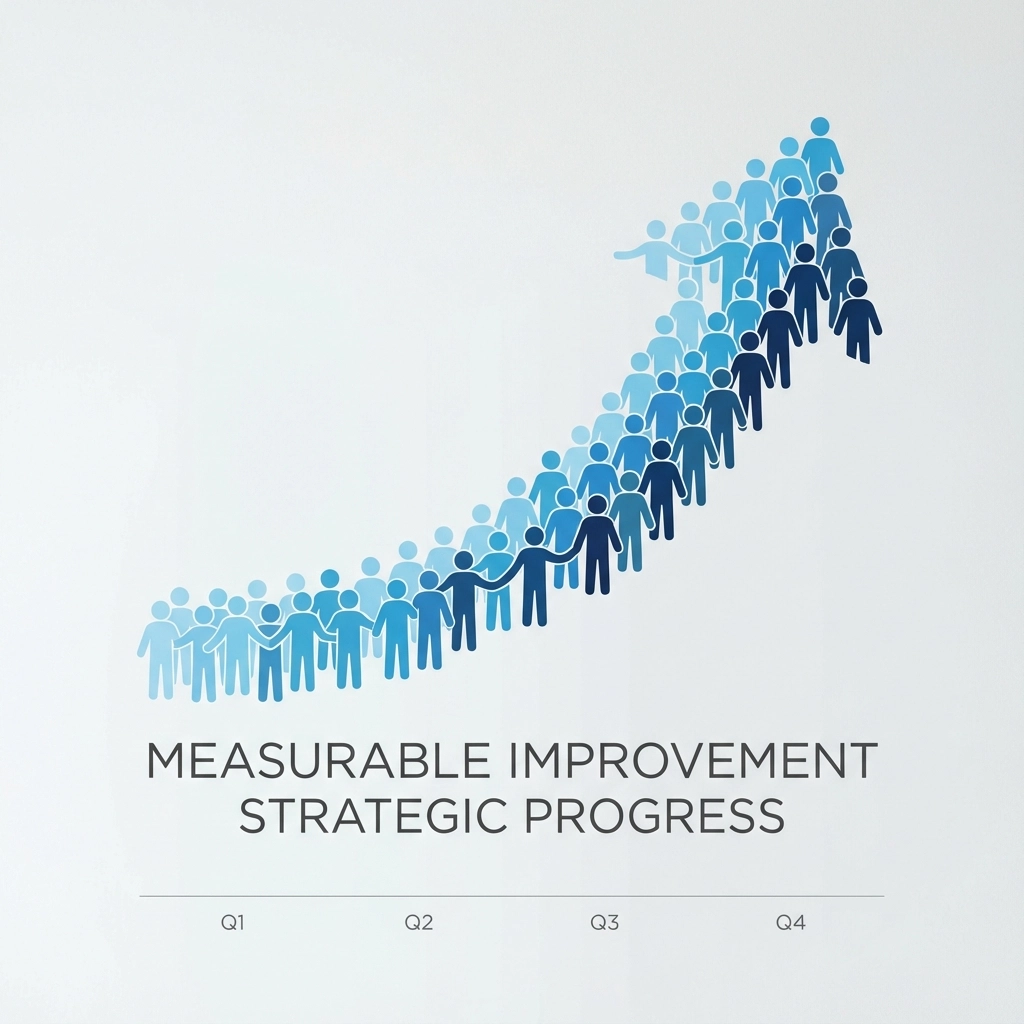
The framework also creates competitive advantages beyond individual projects. Organizations develop internal change capabilities, improve leadership effectiveness, and build cultures that embrace continuous optimization rather than resisting it.
Making the Shift: From Project Management to People Leadership
The difference between optimization success and failure often comes down to leadership approach. Successful executives recognize that optimization is fundamentally about people doing things differently, not just implementing new processes or technologies.
Key leadership behaviors that drive success:
Visible commitment through regular communication and resource allocation
Authentic engagement with concerns and resistance rather than dismissing them
Consistent messaging that connects optimization goals to organizational purpose
Recognition and celebration of adoption milestones and individual contributions
The organizations winning in today's competitive environment understand that optimization isn't a technical challenge: it's a human capital challenge that requires strategic people alignment from day one.
Your Next Step: Implementing Strategic People Alignment
The cost of continuing with traditional optimization approaches is too high. Every failed project represents not just financial loss but organizational credibility damage and decreased willingness to embrace future change.
The Strategic People Alignment Framework provides a proven path to optimization success. The question isn't whether you can afford to implement it: it's whether you can afford not to.
Ready to transform your optimization success rate? Contact Optimum Human Centered Solutions to discuss implementing Strategic People Alignment in your next business optimization initiative. Our proven framework has helped organizations achieve 85% project success rates while building lasting change capabilities.
Comments