

Stop Wasting Time on Outdated Performance Reviews: Try These 7 Culture-Building Hacks
- saafir.jenkins

- Dec 12, 2025
- 5 min read
Your annual performance review process is broken. You know it, your managers know it, and your employees definitely know it. Those dreaded once-a-year conversations that consume weeks of preparation, create anxiety across your organization, and deliver marginal business impact? They're not just ineffective: they're actively damaging your culture.
Here's the reality: Companies still clinging to traditional performance reviews are 4.2 times less likely to outperform their peers and miss out on an average 30% higher revenue growth that comes from modern performance management approaches.
The solution isn't to tweak your existing system. It's to completely reimagine how you develop, engage, and retain talent through culture-building practices that drive real business results.
Hack #1: Replace Annual Reviews with Continuous Feedback Loops
The Problem: Annual reviews create a false scarcity around feedback, concentrating all performance conversations into high-stakes, stressful moments that rarely drive meaningful change.
The Solution: Implement continuous feedback systems where meaningful conversations happen naturally throughout the year. This isn't about constant micromanagement: it's about creating regular touchpoints that keep development and performance aligned with business priorities.
Strategic Implementation: Build feedback into your existing workflows. Use team meetings, project completions, and milestone achievements as natural feedback moments. Train your managers to deliver specific, actionable input tied directly to business outcomes, not personality traits or vague observations.
Culture Impact: This approach normalizes growth conversations and removes the anxiety associated with formal review periods. Employees become more receptive to feedback when it's consistent and constructive rather than concentrated and evaluative.

Hack #2: Deploy Strategic One-on-One Coaching Sessions
The Problem: Traditional reviews focus on past performance evaluation rather than future capability development.
The Solution: Transform your management approach with regular one-on-one coaching sessions that prioritize employee development and strategic alignment. Companies like Spotify have completely eliminated calendar-based performance systems in favor of flexible, employee-driven development conversations.
Strategic Implementation:Schedule monthly 30-45 minute sessions focused on three key areas: current project performance, skill development opportunities, and career trajectory alignment with organizational needs. Train managers to ask powerful questions: "What obstacles are preventing your best work?" and "How can we better align your strengths with team priorities?"
Culture Impact: This creates a culture of investment in people rather than judgment. When employees feel genuinely supported in their growth, productivity increases by up to 40% compared to traditional review approaches.
Hack #3: Implement Project-Based Performance Tracking
The Problem: Annual reviews attempt to capture an entire year's worth of work in a single conversation, often missing critical details and real-time learning opportunities.
The Solution: Capture feedback immediately after project completion when details are fresh and learning opportunities are most relevant. This approach provides concrete reference points for performance discussions while giving leaders real-time visibility into cross-functional contributions.
Strategic Implementation:Create standardized project retrospectives that assess three elements: technical execution, collaboration effectiveness, and business impact. Document these in a centralized system that builds a comprehensive performance narrative throughout the year.
Culture Impact: Project-based tracking creates a culture of continuous improvement and accountability. Teams become more focused on delivering measurable outcomes rather than managing impressions during review season.
Hack #4: Establish OKR-Driven Performance Alignment
The Problem: Traditional reviews often focus on subjective personality assessments rather than measurable business contributions.
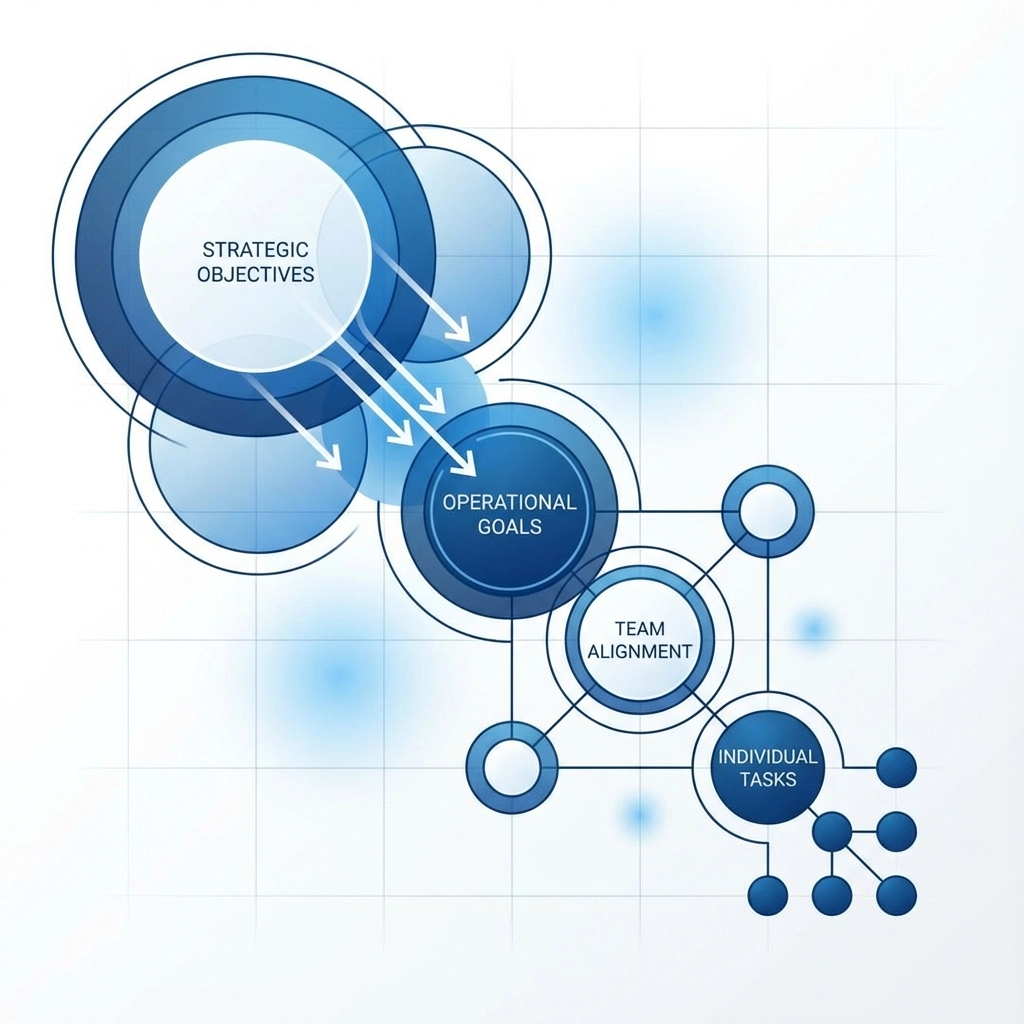
The Solution: Implement Objectives and Key Results (OKRs) that shift focus from individual ratings to measurable achievements directly tied to organizational priorities. This goal-oriented approach creates clear line-of-sight between individual work and strategic outcomes.
Strategic Implementation:Set quarterly OKRs that cascade from organizational priorities to team goals to individual objectives. Conduct brief check-ins every two weeks to track progress, identify obstacles, and adjust goals when business priorities shift.
Culture Impact: OKRs create a culture of transparency and strategic alignment. When everyone understands how their work contributes to broader success, engagement and performance naturally improve.
Hack #5: Leverage 360-Degree Feedback Systems
The Problem: Single-source feedback (typically from direct managers) provides incomplete performance pictures and perpetuates organizational blind spots.
The Solution: Implement comprehensive 360-degree feedback that captures input from multiple stakeholders: managers, peers, direct reports, and cross-functional collaborators. This creates a more complete picture of impact and contribution across the organization.
Strategic Implementation:Use structured feedback tools that focus on specific behaviors and outcomes rather than personality traits. Conduct 360 reviews quarterly for leadership roles and semi-annually for individual contributors. Ensure all feedback ties directly to role expectations and business objectives.
Culture Impact: Multi-source feedback creates a culture of mutual accountability and collaborative development. It breaks down silos and encourages cross-functional relationship building.
Hack #6: Deploy AI-Powered Performance Intelligence
The Problem: Manual performance tracking is time-intensive, often biased, and lacks the data depth needed for strategic decision-making.
The Solution: Implement AI-powered performance platforms that automate routine processes, eliminate bias, and provide continuous visibility into employee performance patterns. These tools identify development opportunities, track goal progress in real-time, and surface insights that human observation might miss.
Strategic Implementation:Choose platforms that integrate with your existing workflow tools and provide actionable intelligence rather than just data visualization. Use AI insights to identify high-potential employees, predict retention risks, and optimize team composition for maximum performance.
Culture Impact: Data-driven performance management creates a culture of fairness and objectivity. When employees trust that performance evaluation is based on measurable contributions rather than subjective impressions, engagement and motivation increase significantly.
Hack #7: Build Development-Focused Accountability Systems
The Problem: Traditional performance management emphasizes what employees failed to achieve rather than empowering future success.
The Solution: Reframe your entire approach from performance evaluation to performance empowerment. Use transparent activity tracking and key performance indicators to create shared accountability while maintaining focus on growth and development.
Strategic Implementation:Establish clear, measurable expectations tied to role requirements and business outcomes. Use verified activity levels, project contributions, and skill development progress as discussion points for regular coaching conversations. Focus on removing obstacles and providing resources rather than assigning blame for shortfalls.
Culture Impact: Development-focused systems create a culture of psychological safety and continuous learning. When employees believe the organization is genuinely invested in their success, they're more likely to take calculated risks, share innovative ideas, and maintain long-term commitment to the organization.

The Strategic Imperative: Why This Transformation Matters Now
Organizations implementing these culture-building approaches report measurable improvements across key business metrics. Companies with modern performance management systems experience 30% higher revenue growth compared to those using traditional approaches.
More importantly, these systems prepare your organization for the future of work. As remote and hybrid models become permanent, the ability to maintain high performance through relationships rather than proximity becomes a critical competitive advantage.
Making the Transition: Your 90-Day Implementation Roadmap
Month 1: Assess your current performance management effectiveness and identify the biggest pain points. Survey employees about their review experience and gather data on time investment versus business impact.
Month 2: Select and pilot 2-3 of these hacks with a small group of high-performing teams. Document the process, gather feedback, and refine your approach based on real organizational needs.
Month 3: Scale successful pilots across the organization while providing comprehensive manager training on new approaches. Establish success metrics and tracking systems to measure the impact on employee engagement, retention, and business performance.
The organizations thriving in today's competitive landscape aren't the ones with the most sophisticated evaluation systems: they're the ones building cultures that naturally drive high performance through meaningful human connections and strategic alignment.
Ready to transform your performance management approach?Contact Optimum Human Centered Solutions to develop a customized implementation strategy that aligns with your organizational culture and business objectives.
Comments